recipes of faith banner small

Recipes of Faith to be shared among sisters in Christ Jesus Our Lord TM The mission of this lay apostolate is for contemporary women to grow in God’s love through sharing Recipes of Faith, to pray for the needs of the Church today and to welcome, to serve and to listen to the Lord –in the spirit of Martha and Mary of Bethany- through leading a sacramental life.

when one opens their home in the spirit of St. Martha so that we may become like Mary and sit at the feet of Jesus, one welcomes the Lord Himself. Jesus said, “For where two or three are gathered in my name, there am I in the midst of them." (Mt 18, 20)  

One of the goals of this lay apostolate is to pray for the needs of our Church today; most especially for vocations to the priesthood. Through life experiences, prayer and meditation on the life of Jesus Christ, we have developed a devotion that centers on Martha and Mary of Bethany as icons for a living faith and fruitful spirituality today. It is their examples of serving and listening to the Lord, which contemporary women need in order to grow in God’s love. They ask us to ask ourselves: is Jesus important enough to me for me to be Martha or Mary? It is also through sharing Recipes of Faith that we become aware that God is present to us while we fulfill our vocations as wives, mothers and witnesses for Jesus Christ. Often, the woman at work in the home was the central figure in the parables that Jesus told. He comes to us where we are with faith in us that we will help sustain His mission; much like Martha “went and met him” (Jn 11, 20) with faith just before He raised her brother Lazarus from the dead. Our belief is that like Martha and Mary of Bethany, women of faith will continue to serve Jesus Christ who “is the same yesterday, and today and for ever.” (Heb 13, 8)

When we meditate on the Gospel of John and the beginning of Christ’s ministry, we notice that Andrew was among the first to seek out Jesus and where He stayed.  Doesn’t He sometimes stay at the home of Martha and Mary of Bethany?  Is He not present in the Holy Eucharist?  John’s Gospel tells us that Andrew stayed with Him for an afternoon. Then, “He first found his brother Simon, and said to him, ‘We have found the Messiah!’” (Jn 1, 41)  Through witness then, we perpetuate His ministry and we participate as His disciples.
We remember Martha and Mary for their devotion to Our Lord through the work of their hands. For example, Martha prepared the meal for her Divine Guest. Mary anointed His feet with costly perfume. And when we gather to pray, we too offer devotion to Our Lord Jesus through the work of our hands.
candleLET US PRAY
Lord God, may our prayers rise like incense before your throne. To your beloved Son, Martha said, “Lord, if you had been here, my brother would never have died.”

Jesus said, “For where two or three are gathered in my name, there am I in the midst of them.” (Mt 18, 20)

Jesus said, “I am with you always…” We believe He is with us always through the Word, the gift of the ministerial priesthood, one another and the Sacraments. And we ask all these things through Christ Our Lord, AMEN.

Prayer Request

Please type your full name.
Invalid email address.
Invalid Input
Invalid Input
Invalid Input
Invalid Input
Invalid Input
Invalid Input
Verification
Invalid Input

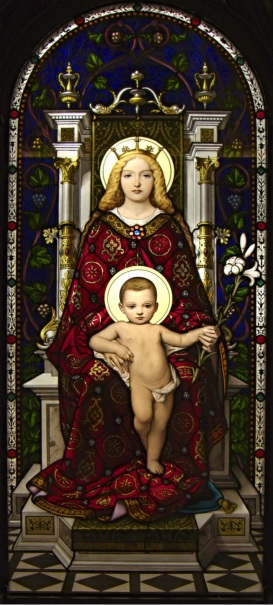
mary and baby jesusLord God, through the intercession of the Blessed Virgin Mary and our patrons Martha and Mary of Bethany, we lift up these petitions to you:
Please respond, Merciful Lord, hear our prayer….

For today’s shepherds:

may they lead others to daily conversion, love of the Sacraments and Your words of Spirit and life, we pray...

For those discerning the call to the priesthood:

sustain them in courage and may they fan into flame the gift of God...

For the Diocese of Pittsburgh and the "On Mission For the Church Alive!" initiative:

may the Holy Spirit lead the way "building toward the future"...

For those who work for religious liberty around the world:

may their initiatives succeed for the sake of the common good…

For those who suffer with Christ in body, mind or spirit:

may they be renewed in strength and receive the healing touch of the Divine Physician...

For families in crisis:

may their members be strengthened as Mary was strengthened at the foot of the Cross…

For those who carry heavy burdens:

may God grant them perseverance in prayer…

For those who are too busy for God:

may Mary who listened to his words and Martha who served his needs intercede for them…

For those committed to the Pro-Life Movement:

most especially; for birth mothers and adoptive mothers and all who witness to sacrificial love…


For the family, the domestic Church:

may the love and support among its' members reflect the deep mystery of the Eucharist...

For children of divorce:

may their experience enkindle a deep respect for a covenant of love and fidelity…


For those who are unemployed:

may they grow in trust of the Author of all Sustenance...

For young people:

may they discover their gifts and use them to build up the Kingdom of God in the world…

For engaged couples and newlyweds:

may their love be a reflection of Christ's love for his Bride, the Church...


For those recently received into the Church:

may they never take the gift of faith for granted and attain the full stature of Christ...

For the dying:

may they find comfort in the presence of loved ones; and hope in the Risen Christ...

For those who mourn:

may they be comforted as Jesus promised…

For those who have died:

may they inherit the Kingdom through the mercy of God - now seeing, now hearing what God has ready for those who love Him…
                                                                                       Theresa M. Lopata, Alex R. Lopata

Let us pause for a moment of silence for those petitions we hold in the depths of our hearts known to God alone…


LET US PRAY

Lord God, may our prayers rise like incense before your throne. To your beloved Son, Martha said, “Lord, if you had been here, my brother would never have died.” (Jn 11, 21)

Jesus said:

“For where two or three are gathered in my name, there am I in the midst of them.” (Mt 18, 20)

“I am with you always…” (Mt 28, 20)

We believe He is with us always through the Word, the gift of the ministerial priesthood, one another and the sacraments. And we ask all these things through Christ Our Lord, AMEN.

The Martha and Mary Ministry is a formed nonprofit corporation (501)(c)(3) organized as a women’s auxiliary, associated with the Roman Catholic Church, ministering through prayer and service to further the Church’s religious beliefs.

St. Martha:

Mentioned only in Luke, x, 38-42; and John, xi; xii, sqq. The Aramaic form occurs in a Nabatfan inscription found at Puteoli, and now in the Naples Museum; it is dated A.D. 5 (Corpus Inscr. Semit., 158); also in a Palmyrene inscription, where the Greek translation has the form Marthein, A.D. 179.

Mary, Martha, and Lazarus are represented by St. John as living at Bethania, but St. Luke would seem to imply that they were, at least at one time, living in Galilee; he does not mention the name of the town, but it may have been Magdala, and we should thus, supposing Mary of Bethania and Mary Magdalene to be the same person, understand the appellative "Magdalene". The words of St. John (xi, 1) seem to imply a change of residence for the family. It is possible, too, that St. Luke has displaced the incident referred to in c. x. The likeness between the pictures of Martha presented by Luke and John is very remarkable. The familiar intercourse between the Saviour of the world and the humble family which St. Luke depicts is dwelt on by St. John when he tells us that "Jesus loved Martha, and her sister Mary, and Lazarus" (xi, 5).{showhide}Again the picture of Martha's anxiety (John, xi, 20-21, 39) accords with the picture of her who was "busy about much serving" (Luke, x, 40); so also in John, xii, 2: "They made him a supper there: and Martha served." But St. John has given us a glimpse of the other and deeper side of her character when he depicts her growing faith in Christ's Divinity (xi, 20-27), a faith which was the occasion of the words: "I am the resurrection and the life." The Evangelist has beautifully indicated the change that came over Martha after that interview: "When she had said these things, she went and called her sister Mary secretly, saying: The Master is come, and calleth for thee."

Difficulties have been raised about the last supper at Bethania. St. John seems to put it six days before the Pasch, and, so some conclude, in the house of Martha; while the Synoptic account puts it two days before the Pasch, and in the house of Simon the Leper. We need not try to avoid this difficulty by asserting that there were two suppers; for St. John does not say that the supper took place six days before, but only that Christ arrived in Bethania six days before the Pasch; nor does he say that it was in the house of Martha. We are surely justified in arguing that, since St. Matthew and St. Mark place the scene in the house of Simon, St. John must be understood to say the same; it remains to be proved that Martha could not "serve" in Simon's house.
(Catholic Encyclopedia)


St. Mary Magdalene:

Mary Magdalen was so called either from Magdala near Tiberias, on the west shore of Galilee, or possibly from a Talmudic expression meaning "curling women's hair," which the Talmud explains as of an adulteress.

In the New Testament she is mentioned among the women who accompanied Christ and ministered to Him (Luke 8:2-3), where it is also said that seven devils had been cast out of her (Mark 16:9). She is next named as standing at the foot of the cross (Mark 15:40; Matthew 27:56; John 19:25; Luke 23:49). She saw Christ laid in the tomb, and she was the first recorded witness of the Resurrection.

The Greek Fathers, as a whole, distinguish the three persons:
* the "sinner" of Luke 7:36-50;
* the sister of Martha and Lazarus, Luke 10:38-42 and John 11; and
* Mary Magdalen.

On the other hand most of the Latins hold that these three were one and the same. Protestant critics, however, believe there were two, if not three, distinct persons. It is impossible to demonstrate the identity of the three; but those commentators undoubtedly go too far who assert, as does Westcott (on John 11:1), "that the identity of Mary with Mary Magdalene is a mere conjecture supported by no direct evidence, and opposed to the general tenour of the gospels." It is the identification of Mary of Bethany with the "sinner" of Luke 7:37, which is most combatted by Protestants. It almost seems as if this reluctance to identify the "sinner" with the sister of Martha were due to a failure to grasp the full significance of the forgiveness of sin. The harmonizing tendencies of so many modern critics, too, are responsible for much of the existing confusion. {showhide}The first fact, mentioned in the Gospel relating to the question under discussion is the anointing of Christ's feet by a woman, a "sinner" in the city (Luke 7:37-50). This belongs to the Galilean ministry, it precedes the miracle of the feeding of the five thousand and the third Passover. Immediately afterwards St. Luke describes a missionary circuit in Galilee and tells us of the women who ministered to Christ, among them being "Mary who is called Magdalen, out of whom seven devils were gone forth" (Luke 8:2); but he does not tell us that she is to be identified with the "sinner" of the previous chapter. In 10:38-42, he tells us of Christ's visit to Martha and Mary "in a certain town"; it is impossible to identify this town, but it is clear from 9:53, that Christ had definitively left Galilee, and it is quite possible that this "town" was Bethany. This seems confirmed by the preceding parable of the good Samaritan, which must almost certainly have been spoken on the road between Jericho and Jerusalem. But here again we note that there is no suggestion of an identification of the three persons (the "sinner", Mary Magdalen, and Mary of Bethany), and if we had only St. Luke to guide us we should certainly have no grounds for so identifying them. St. John, however, clearly identifies Mary of Bethany with the woman who anointed Christ's feet (12; cf. Matthew 26 and Mark 14). It is remarkable that already in 11:2, St. John has spoken of Mary as "she that anointed the Lord's feet", he aleipsasa; It is commonly said that he refers to the subsequent anointing which he himself describes in 12:3-8; but it may be questioned whether he would have used he aleipsasa if another woman, and she a "sinner" in the city, had done the same. It is conceivable that St. John, just because he is writing so long after the event and at a time when Mary was dead, wishes to point out to us that she was really the same as the "sinner." In the same way St. Luke may have veiled her identity precisely because he did not wish to defame one who was yet living; he certainly does something similar in the case of St. Matthew whose identity with Levi the publican (5:7) he conceals.

If the foregoing argument holds good, Mary of Bethany and the "sinner" are one and the same. But an examination of St. John's Gospel makes it almost impossible to deny the identity of Mary of Bethany with Mary Magdalen. From St. John we learn the name of the "woman" who anointed Christ's feet previous to the last supper. We may remark here that it seems unnecessary to hold that because St. Matthew and St. Mark say "two days before the Passover", while St. John says "six days" there were, therefore, two distinct anointings following one another. St. John does not necessarily mean that the supper and the anointing took place six days before, but only that Christ came to Bethany six days before the Passover. At that supper, then, Mary received the glorious encomium, "she hath wrought a good work upon Me . . . in pouring this ointment upon My body she hath done it for My burial . . . wheresoever this Gospel shall be preached . . . that also which she hath done shall be told for a memory of her." Is it credible, in view of all this, that this Mary should have no place at the foot of the cross, nor at the tomb of Christ? Yet it is Mary Magdalen who, according to all the Evangelists, stood at the foot of the cross and assisted at the entombment and was the first recorded witness of the Resurrection. And while St. John calls her "Mary Magdalen" in 19:25, 20:1, and 20:18, he calls her simply "Mary" in 20:11 and 20:16.

In the view we have advocated the series of events forms a consistent whole; the "sinner" comes early in the ministry to seek for pardon; she is described immediately afterwards as Mary Magdalen "out of whom seven devils were gone forth"; shortly after, we find her "sitting at the Lord's feet and hearing His words." To the Catholic mind it all seems fitting and natural. At a later period Mary and Martha turn to "the Christ, the Son of the Living God", and He restores to them their brother Lazarus; a short time afterwards they make Him a supper and Mary once more repeats the act she had performed when a penitent. At the Passion she stands near by; she sees Him laid in the tomb; and she is the first witness of His Resurrection--excepting always His Mother, to whom He must needs have appeared first, though the New Testament is silent on this point. In our view, then, there were two anointings of Christ's feet--it should surely be no difficulty that St. Matthew and St. Mark speak of His head--the first (Luke 7) took place at a comparatively early date; the second, two days before the last Passover. But it was one and the same woman who performed this pious act on each occasion.

The Greek Church maintains that the saint retired to Ephesus with the Blessed Virgin and there died, that her relics were transferred to Constantinople in 886 and are there preserved. Gregory of Tours (De miraculis, I, xxx) supports the statement that she went to Ephesus. However, according to a French tradition , Mary, Lazarus, and some companions came to Marseilles and converted the whole of Provence. Magdalen is said to have retired to a hill, La Sainte-Baume, near by, where she gave herself up to a life of penance for thirty years. When the time of her death arrived she was carried by angels to Aix and into the oratory of St. Maximinus, where she received the viaticum; her body was then laid in an oratory constructed by St. Maximinus at Villa Lata, afterwards called St. Maximin. History is silent about these relics till 745, when according to the chronicler Sigebert, they were removed to Vézelay through fear of the Saracens. No record is preserved of their return, but in 1279, when Charles II, King of Naples, erected a convent at La Sainte-Baume for the Dominicans, the shrine was found intact, with an inscription stating why they were hidden. In 1600 the relics were placed in a sarcophagus sent by Clement VIII, the head being placed in a separate vessel. In 1814 the church of La Sainte-Baume, wrecked during the Revolution, was restored, and in 1822 the grotto was consecrated afresh. The head of the saint now lies there, where it has lain so long, and where it has been the centre of so many pilgrimages.
(Catholic Encyclopedia)

parchment logoThe mission of this lay apostolate is for contemporary women to grow in God’s love through sharing Recipes of Faith, to pray for the needs of the Church today and to welcome, to serve and to listen to the Lord –in the spirit of Martha and Mary of Bethany- through leading a sacramental life.


Recipes of Faith to be shared among sisters in

Christ Jesus Our Lord™


Legal:
The Martha and Mary Ministry is a formed nonprofit corporation (501)(c)(3) organized as a women’s auxiliary, associated with the Roman Catholic Church, ministering through prayer and service to further the Church’s religious beliefs.

If you would like to join our ministry group or would just like to reach out to us please contact us.
Email: This email address is being protected from spambots. You need JavaScript enabled to view it.  
Address: PO Box 10883 Pittsburgh, PA 15236-0883

Contact us

Please type your full name.
Invalid email address.
Invalid Input
Invalid Input
Invalid Input
Invalid Input
Invalid Input
Invalid Input
Invalid Input
Invalid Input
Invalid Input
Verification
Invalid Input
faith box
donations
inspirational-gifts
holydoor
the vatican
catholic diocese of pittsburgh
ewtn